Abstract Figurative art

Rebecca Jack, an intuitive painter, creates vibrant, bold works that highlight the beauty of imperfection through visible layering, expressive brush work and mark-making. Her painterly style, use of line, exploration of color and shape are defining elements in her work. Abstracting interior and exterior spaces in conjunction with the figure are common themes she uses to investigate aspects of self. Approaching her work thru an emotive lens, her paintings offer a peek into imaginative worlds that are both whimsical and deeply reflective. Bringing to life one's essence and humanity, Jack is a self-described “soul painter”.

Originally from Knoxville, Tennessee, Rebecca was drawn to painting and drawing at an early age. She has a degree in Interior design from the University of Tennessee.

Her art has been featured in Architectural Digest, House Beautiful and Atlanta Homes magazine as well as designer showhouses throughout the Southeast.

She resides in Atlanta with her husband Lars, their son Leif and dog Elvis. She is obsessed with animals, mostly dogs, a great cup of coffee and learning to garden in her spare time!
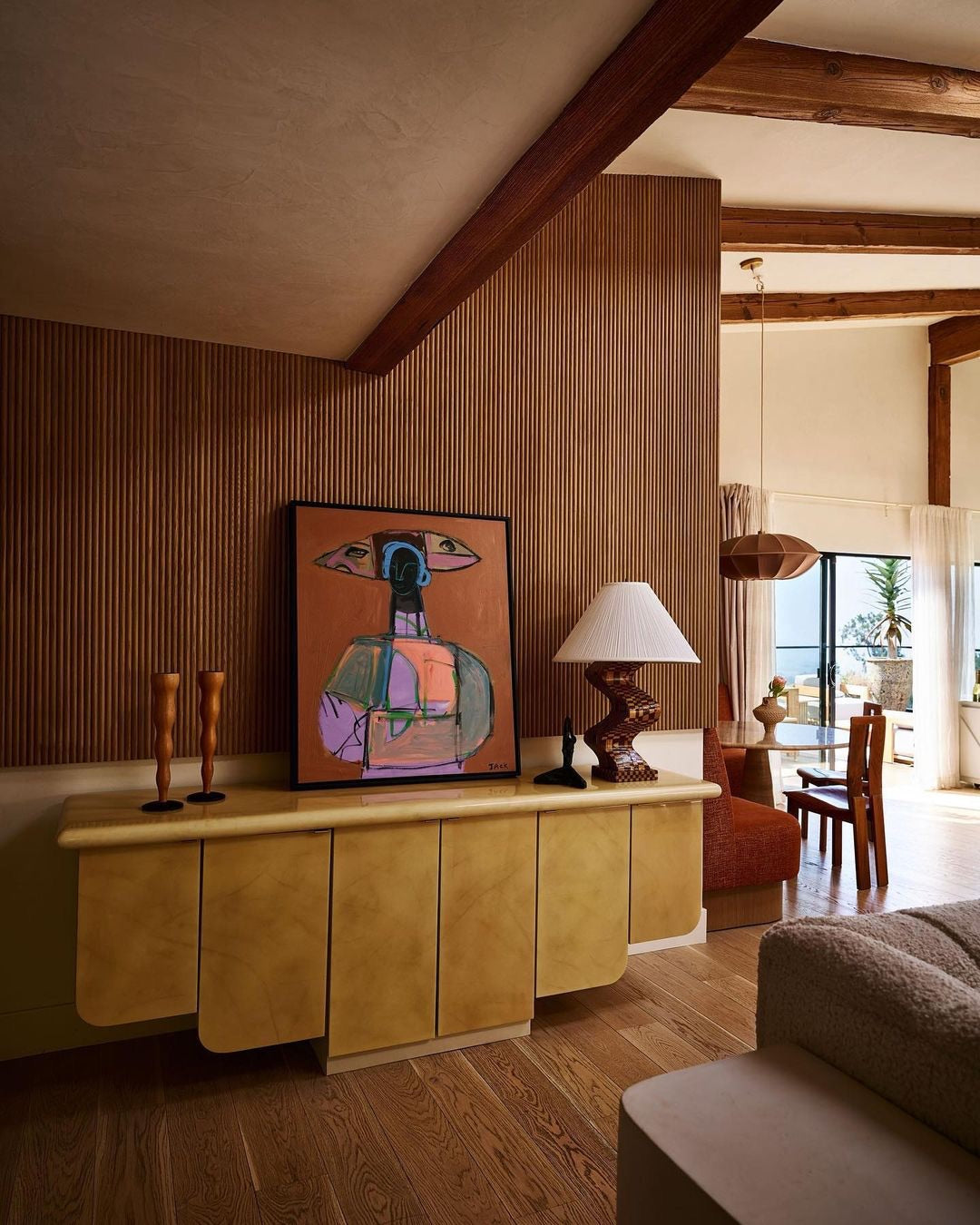
September 2022 issue

Architectural Digest

Design by Night Palm, Photo: Frank Frances

Bilt Artist Residency

Rebecca Jack

As Bilt’s Resident Artist, we’ve commissioned Jack to create three original paintings which Bilt Members can collect as exclusive, limited edition canvas prints. “Art brings a life and a soul to a home and should be collected as an extension of yourself,” says the artist.

Watch
Serenbe Showhouse

Design: Beth Kooby. Photo: Jeff Herr

A conversation with Merritt Gallery

Layers of Expression: Get to know Rebecca Jack

Rebecca Jack’s work blends abstraction, figurative drawing, and portraiture into a unique, expressive style. We spoke with her about her creative process, influences, and the stories she hopes her paintings tell.

From Abstraction to
Figuration

“I definitely do not plan anything,” Rebecca says when asked about her creative process.

Her work is rooted in three key elements: abstraction, figurative drawing, and portraiture. Early in her career, she approached these separately—portraiture focused on emulating a person, abstraction explored color, shape, and line, and figurative work captured gesture and emotion. Over time, she began to combine these practices.

“Now, when I do figurative work, it comes from a point of view of abstraction. I’m not trying to emulate a specific person—it’s all
intuitive, coming from the subconscious.”

Rebecca starts her paintings abstractly, layering colors, shapes, and lines until figures begin to emerge. From there, the work evolves organically, almost like sculpting with paint. Mistakes and accidents are celebrated, adding depth and history to each piece.

“I see these figures three-dimensionally in my head. There
are lots of layers of paint, so I build and remove layers. Mistakes are my biggest ally—they bring beauty and history into the piece.”

Inspiration and Color. Color plays a central role in Rebecca’s work, and she draws inspiration from both intentional and unexpected
sources.

“I’m very responsive—putting down a color and seeing how it reacts with others drives the next choice. Inspiration can come from anywhere: art books, interiors, sculpture… even walking my dog.”

She notices colors in the world around her, from dumpsters to semi-trucks, and finds connections to memory and
emotion.

“Recently, I saw a color in a curb next to a dumpster that reminded me of a hair barrette I had as a kid. Color connects to emotion, memory, and experience for me.”

The Dance Between
Abstraction and Representation

Rebecca describes her artistic journey as a continual balance between abstraction and representation.

“There’s a mystery in abstraction, and a unique quality comes from bringing that mystery into material form. I’ve worked in many subject matters and started bringing them together, and it’s become more
focused on figurative work and expression.”

Influences include Richard Diebenkorn,
who moved between abstraction and figurative work, and the abstract
expressionists, whose energy and expressive brushwork resonate deeply with her.
Techniques such as layering and scraping paint have become integral to her
process, revealing the underlayers and history of a painting.

“Even when I have subject matter in mind, I love expressive
brush marks, drips, and visible energy.”

A Day in the Studio. Rebecca structures her studio time
around her 12-year-old son’s school schedule.

“Once he leaves at eight, I might work out or handle some office tasks, then get to the studio around 9:30–10:00. I warm up with sketches or paper studies, then move on to three or four pieces I’m developing at a
time. Some are just beginning; others more developed.”

Working on multiple pieces allows her
to respond to each as needed, using paint efficiently while keeping the
creative flow going.

“Consistency has been crucial for my practice. Even when I had a day job, committing just 10–20 minutes a day kept me connected to the work. Staying fluid and connected to the process every day is essential.”

What She Hopes Viewers
Take Away.
“I want stories about humanness, emotion, and the human condition to come through. The paintings are about creating a deeper
connection, something maybe in the subconscious.”

In today’s world, with technology and
AI rapidly changing how we live, she sees her work as a reminder of humanity:
empathy, tenderness, reflection, joy, and playfulness. Each painting tells a story, not contrived, but allowed to surface naturally.

“I’m just trying to capture an essence.”https://www.merrittgallery.com/layers-of-expression-a-conversation-with-rebecca-jack/